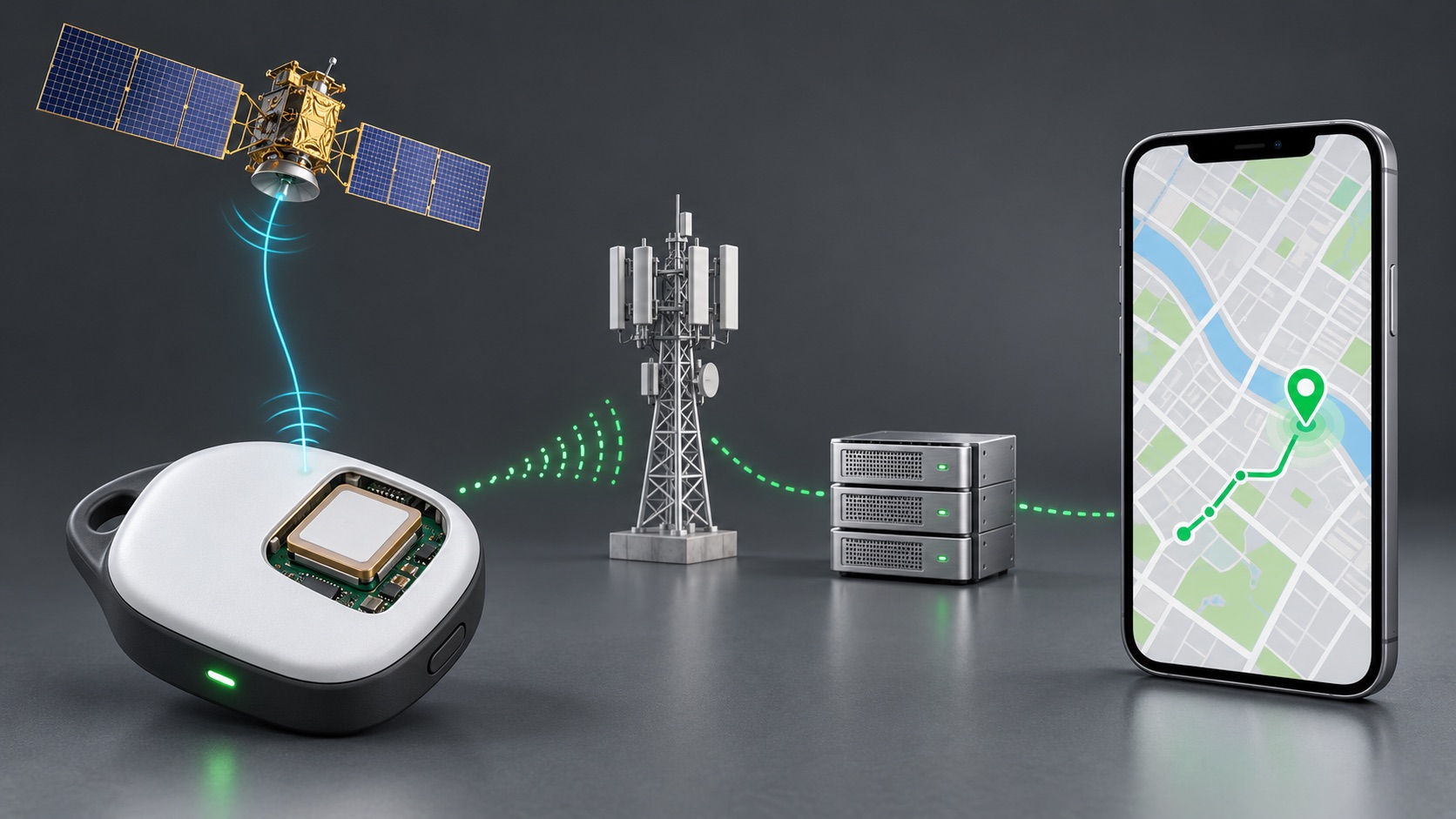
Opening an app and seeing a tracker on a map looks like a simple query. In reality, the result passes through device positioning, mobile communication, cloud processing and presentation.
Understanding those responsibilities helps answer a common question: why has the position on the phone not updated even though the device is switched on?
Start with four distinct roles
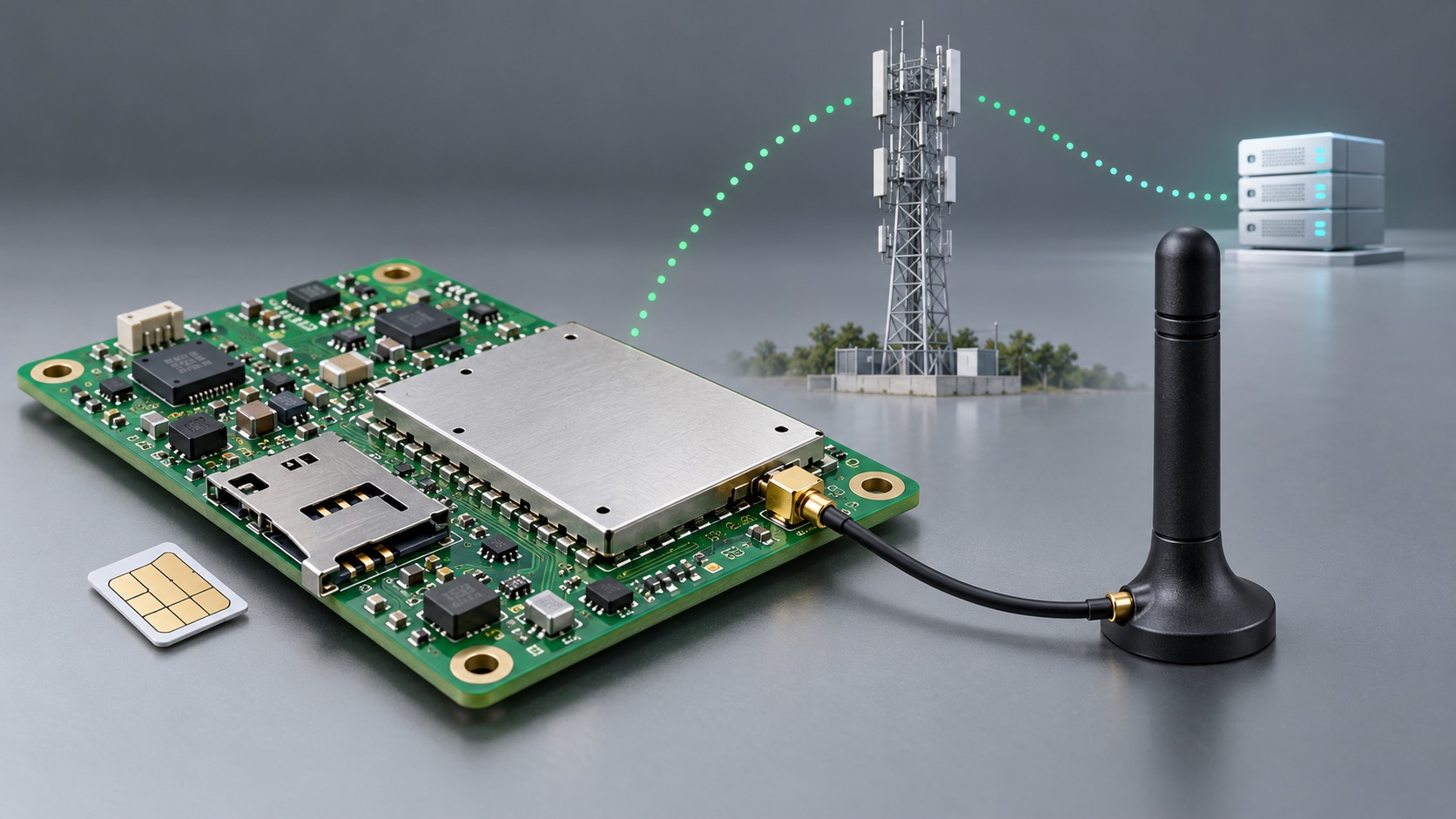
A GPS or other GNSS receiver obtains a position. A 4G module communicates with a remote server. The cloud receives, stores and serves data. The app presents that information to authorised users.
Device firmware coordinates the first two functions, deciding when to obtain a fix, when to upload and how to handle failures. Successful positioning is therefore only the first step: transmission and processing must also complete before the user sees an update.
How does a position record reach the phone?
A normal update can be divided into four steps:
- Acquire a position. The receiver provides valid coordinates; firmware records the acquisition time and status.
- Assemble the record. Position is combined with necessary information such as device ID, record ID and battery state.
- Upload to the cloud. Data travels over 4G, and the cloud authenticates the device and processes the record.
- Update the interface. The app retrieves data the account is permitted to access and displays the position, time and device status.
Time is easily overlooked: acquisition time, server receipt time and app display time can differ. The “latest position” should be determined by acquisition time, not simply by whichever record arrived last.
Handle the failure at the stage where it occurs
If a device obtains a position outdoors but cannot reach the 4G network, it can store the record and upload it later. Conversely, if the network works but the device enters a building and cannot obtain a new fix, it should report that state rather than present old coordinates as a new position.
| Situation | Suggested device or cloud behaviour | What the user should see |
|---|---|---|
| Valid position, failed upload | Buffer records and retry according to policy | Last update time and an offline indication when appropriate |
| Network available, no new fix | Report positioning state and retain history | Last valid position with its acquisition time |
| Historical records uploaded after recovery | Order by acquisition time; prevent older data replacing newer positions | Completed historical tracks, not a current marker moving backwards |
| A record arrives more than once | Deduplicate using the record identifier | Tracks and events without duplicates |
Defining these cases separately tells users more than a single “online” indicator.
How else can 4G assist positioning?
The network can also deliver assistance data. For example, u-blox AssistNow supplies satellite orbital information over the internet to help reduce the time to a first position fix.
This assists satellite positioning; it does not replace satellite signals with 4G. Integration requires checking receiver support, service conditions and data refresh arrangements. It cannot justify a promise of GNSS positioning in every indoor environment.
Choose an update strategy, not just a higher frequency
Position acquisition and uploading can have different intervals. A product needing a detailed track can record more frequently and upload on an agreed schedule; an active search can temporarily request faster updates. Validate the policy against acceptable delay, storage and complete-device power consumption rather than battery capacity alone.
Every stage from device to app should also consider authentication, encrypted transport and access control. Define retention periods, device unlinking and data deletion. For products involving people's locations, explain the collection purpose and obtain appropriate authorisation.
A complete tracking product delivers positions in normal conditions and reports the correct state when positioning fails, connectivity is lost or data is delayed. Only then does the map provide information users can understand and act on.