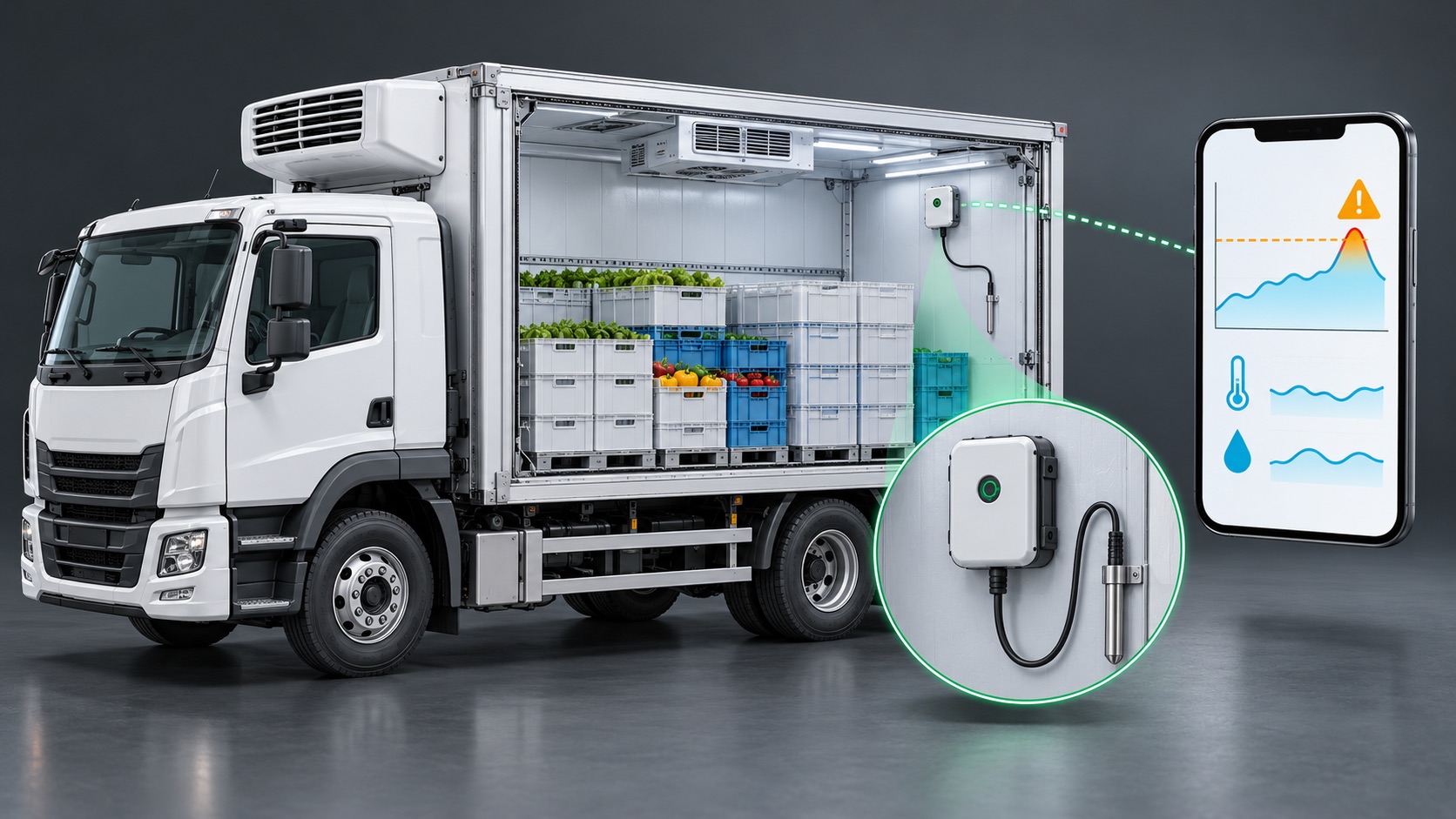
A device on a vehicle, outside a warehouse or attached to a moving asset often cannot rely on fixed Wi-Fi. It needs an independent way to send data to a server and receive remote commands. Cellular 4G is one option to evaluate.
Cat.1 bis is an LTE device category commonly used in IoT. Understanding its value starts with two questions: what provides connectivity, and what determines whether the complete device operates reliably?
First: A 4G module provides communication, not the whole product
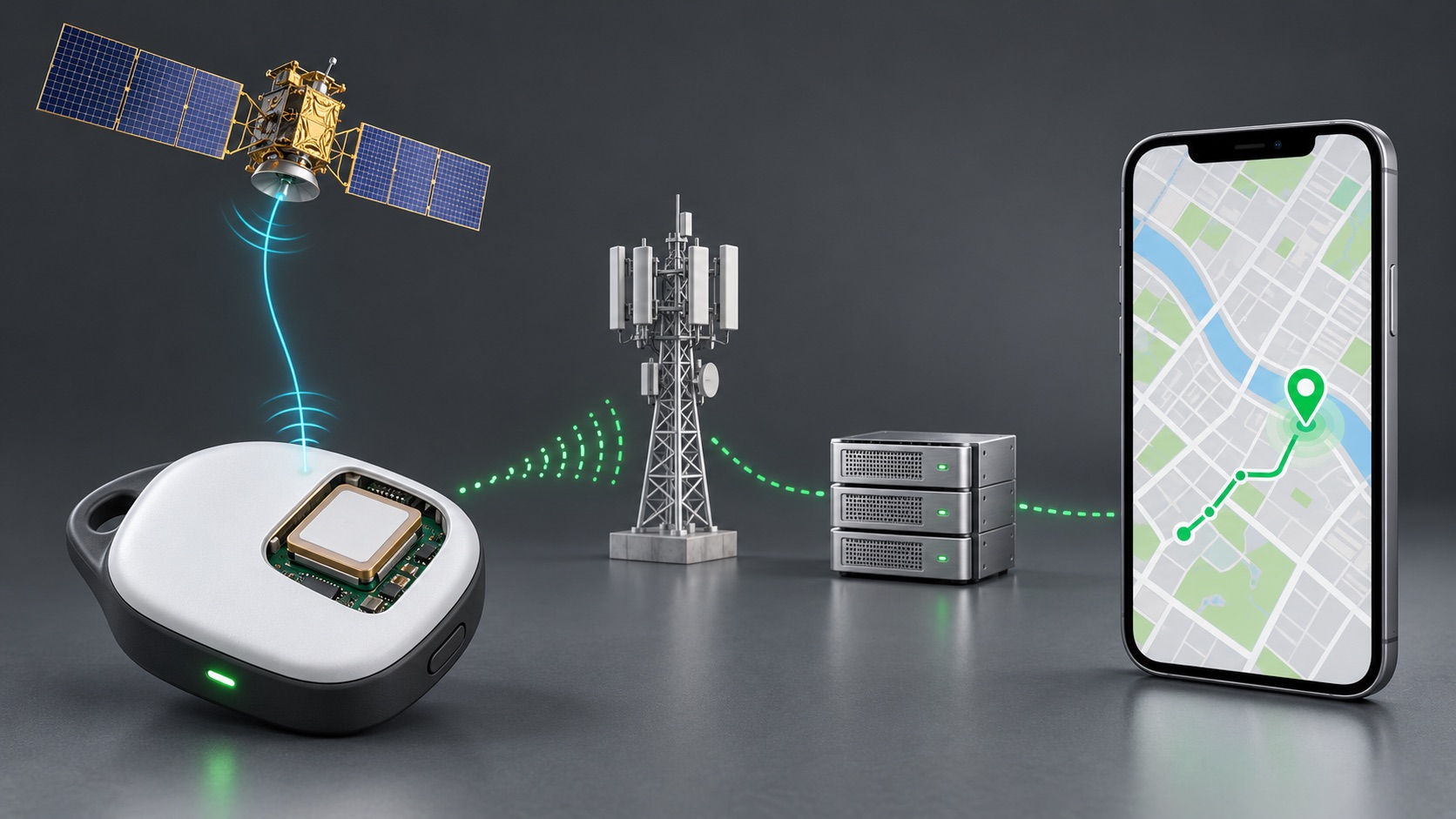
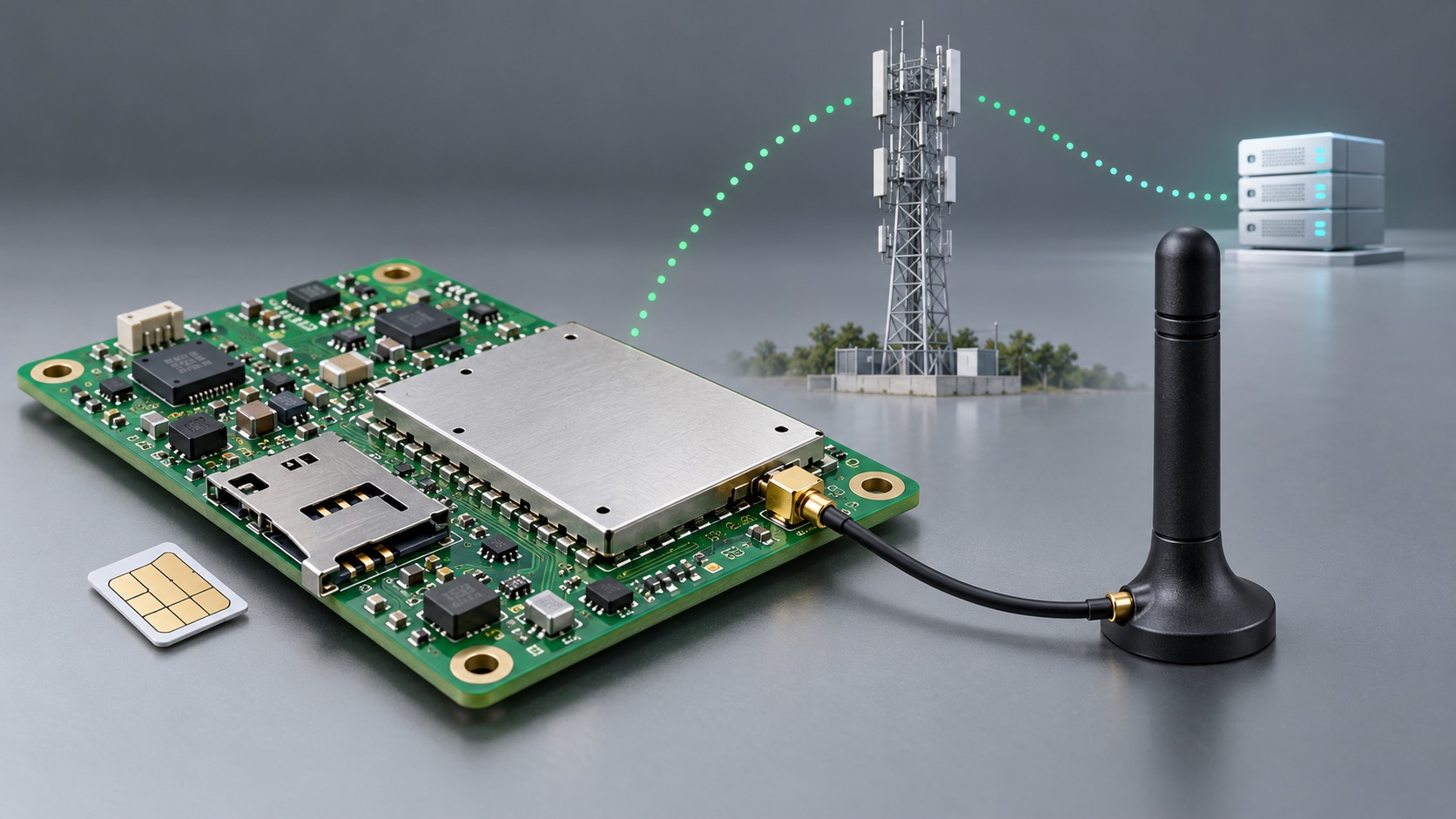
In a typical sensing device, sensors acquire data, a microcontroller runs the application logic, and a 4G module communicates with a server through the mobile operator's network. The server then makes data available to a management platform or mobile app.
Adding a 4G module does not automatically provide temperature sensing, satellite positioning or an app service. Those functions still need their own hardware and software. “Independent connectivity” means not relying on nearby Wi-Fi or a phone to relay data; it does not mean operating without network coverage or an operator service.
What does Cat.1 bis simplify?
Cat.1 bis supports a single receive-antenna design, which can reduce cellular antenna integration complexity. That is worth evaluating for space-constrained devices needing mobile connectivity.
However, the single receive antenna relates to the cellular design. It does not mean that every wireless function in the product shares one antenna. GNSS and Wi-Fi capabilities require their own RF planning.
Quectel's EG915Q documentation describes M2M and IoT applications and offers regional variants. Choosing Cat.1 bis therefore establishes a technology direction; the specific module must still be checked against the target market.
Choose in order: Network, application and power
First, establish where the device will operate. Identify countries, operators and operating areas, then check module bands, network access requirements and SIM or eSIM services. “Supports 4G” alone does not establish worldwide compatibility.
Second, define the communication workload. Periodic temperature and status messages have different requirements from frequent images or continuous video. Establish payload size, reporting frequency, acceptable latency and remote-control needs before assessing suitability.
Third, check power and antenna integration. Battery-powered products need an assessment of the complete operating cycle. Externally powered products also need stable power during communication. Reserve antenna space and validate mounting conditions before finalising the enclosure, rather than selecting a module without providing a suitable environment for it.
From connecting once to operating over time
A successful first upload proves only one path under normal conditions. A real product also encounters weak signals, failed connections, outages and temporarily unavailable servers.
Define explicit behaviour for those states: buffer necessary data, retry according to a policy and upload outstanding records after recovery. Retries must not continue indefinitely, draining the battery without delivering useful data.
Likewise, one low-power figure in a module specification is not the average consumption of the finished product. Include sleep, sensing, connection establishment, transmission and retries in testing to estimate battery life under actual operating conditions.
A practical selection rule
Cat.1 bis can be a candidate for devices that need mobile-network data exchange without depending on fixed Wi-Fi. Evaluate it in sequence: does it match the target network, meet the application needs, fit the power and antenna design, and recover reliably from failures?
This order is more useful than choosing solely by module price or headline data rate.